When A Tree Has To Come Down: A Homeowner's Guide To Safe Removal
Not every tree can be saved — and knowing the warning signs early can protect your roof, your family, and your budget.
A dying or structurally compromised tree is one of the most underestimated risks on a residential property. Fungal conks at the base, deep vertical cracks in the trunk, sudden lean after a storm, or large deadwood over the house are all signals that a professional evaluation is overdue.
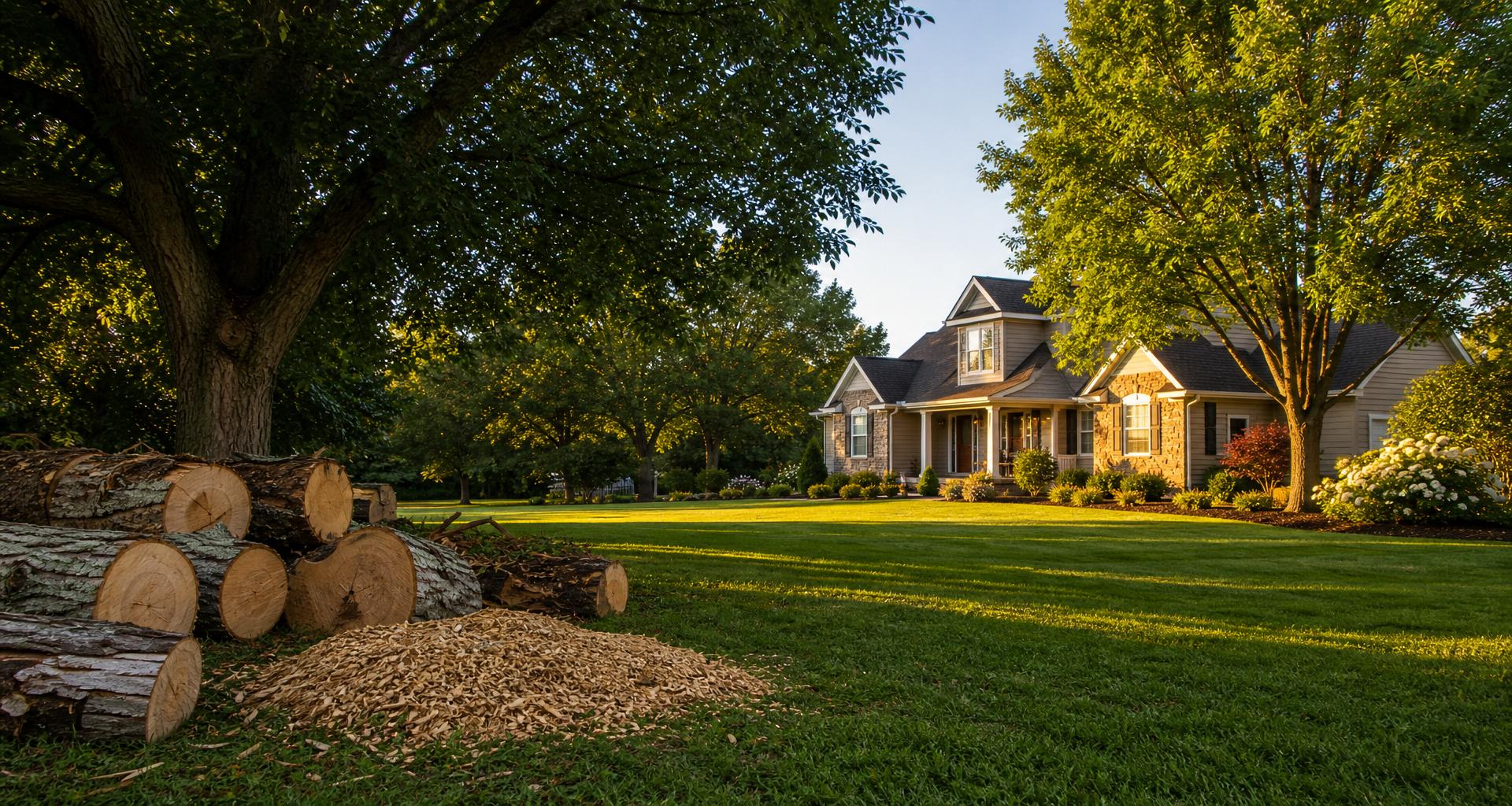
Modern removal is very different from the old 'topple it and hope' method. Our crew uses rigging lines, controlled rope lowering, and — where access is tight — crane-assisted lifts, so heavy sections never touch the roof, driveway, or fence. Every removal ends with a full ground cleanup, chipping of brush, and hauling of debris; firewood-length rounds are stacked wherever the homeowner wants them.
The best time to schedule removal is before it becomes an emergency call. Late winter and early spring — while the ground is firm and canopies are bare — give us the safest working conditions and typically the fairest pricing.